
Hand saw for cutting meat and bone: what to look at before buying
Buying a hand saw for cutting meat and bone on power alone is the fastest way to end up with the wrong machine. These are the five things that actually decide it.
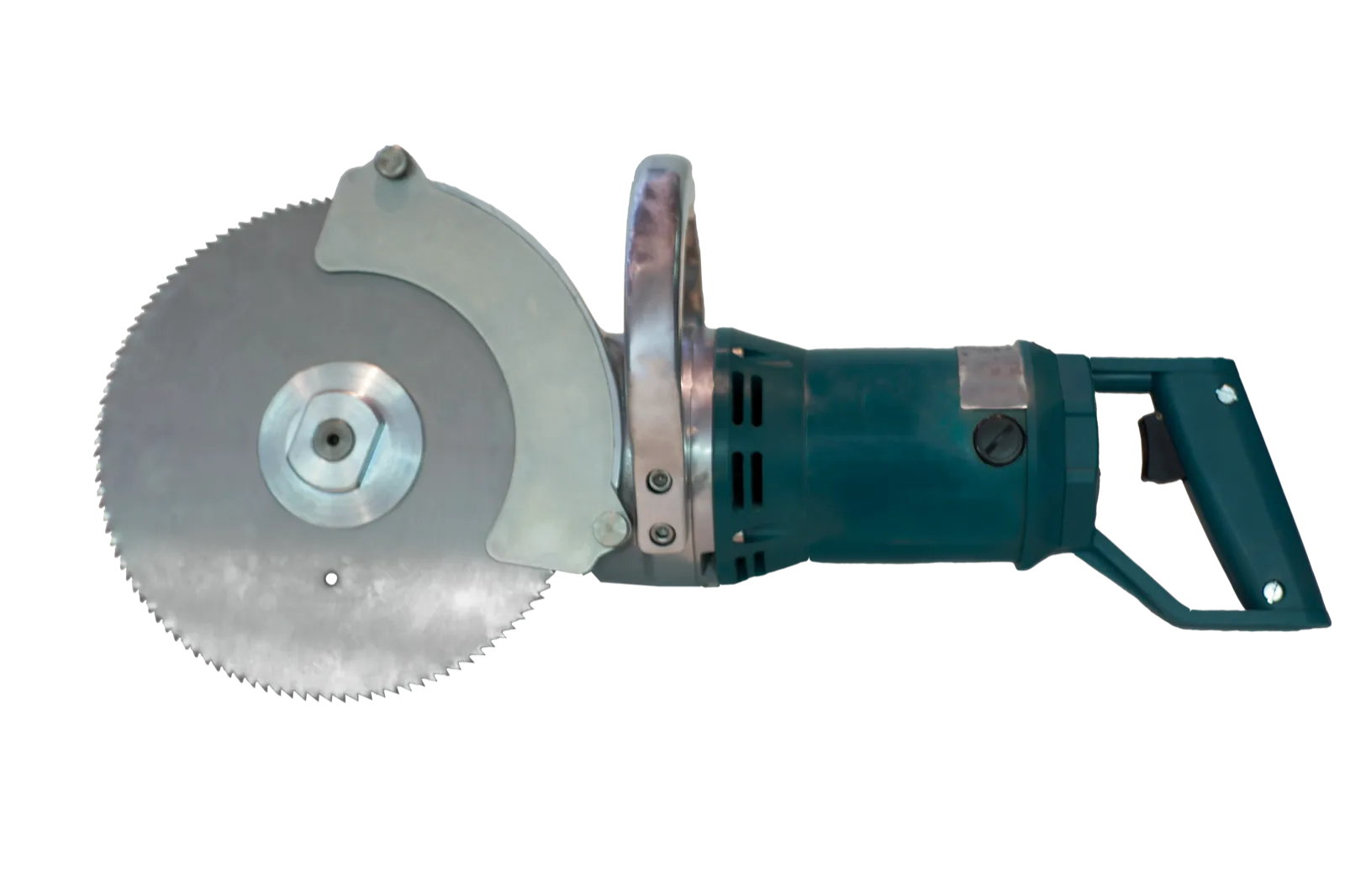
A saw is bought once and used every day for years. These are the five things worth checking before you commit, in the order a cutting room actually cares about them.
1. Which species you work
This decides everything else. Beef bone is harder and the pieces are bigger, so it needs more power and more blade than pork. Getting this wrong means either a machine that struggles or one that is heavier than it needs to be.
2. The cutting depth you really need
Depth ranges from 50 mm on the SM-150 to 80 mm on the SM-235-H. More depth is not automatically better: it comes with more blade, more weight and more machine to control.
3. The weight the operator will carry
This is the most underrated figure on the datasheet. The difference between 3.6 kg and 7.9 kg is invisible in a showroom and very visible at the end of a shift.
4. The guarding
Look for a fixed guard plus a stainless shield that blocks the part of the blade not in contact with the meat. It should be standard, not an extra.
5. Whether it takes a balancer
A suspension ring or anchor bolt means the saw can hang from a tool balancer. That single accessory removes the weight problem entirely, and it is the cheapest thing you can add to a cutting line.
Frequently asked questions
How much should a hand saw for cutting meat and bone weigh?
Between 3.6 and 7.9 kg depending on the model and the species. If the operator will hold it all shift, hang it from a tool balancer regardless of the weight.
Do all the saws take a balancer?
Yes, every ZIURON hand saw comes with a suspension ring or anchor bolt, and each model has a specific balancer reference that we test and fit ourselves.